
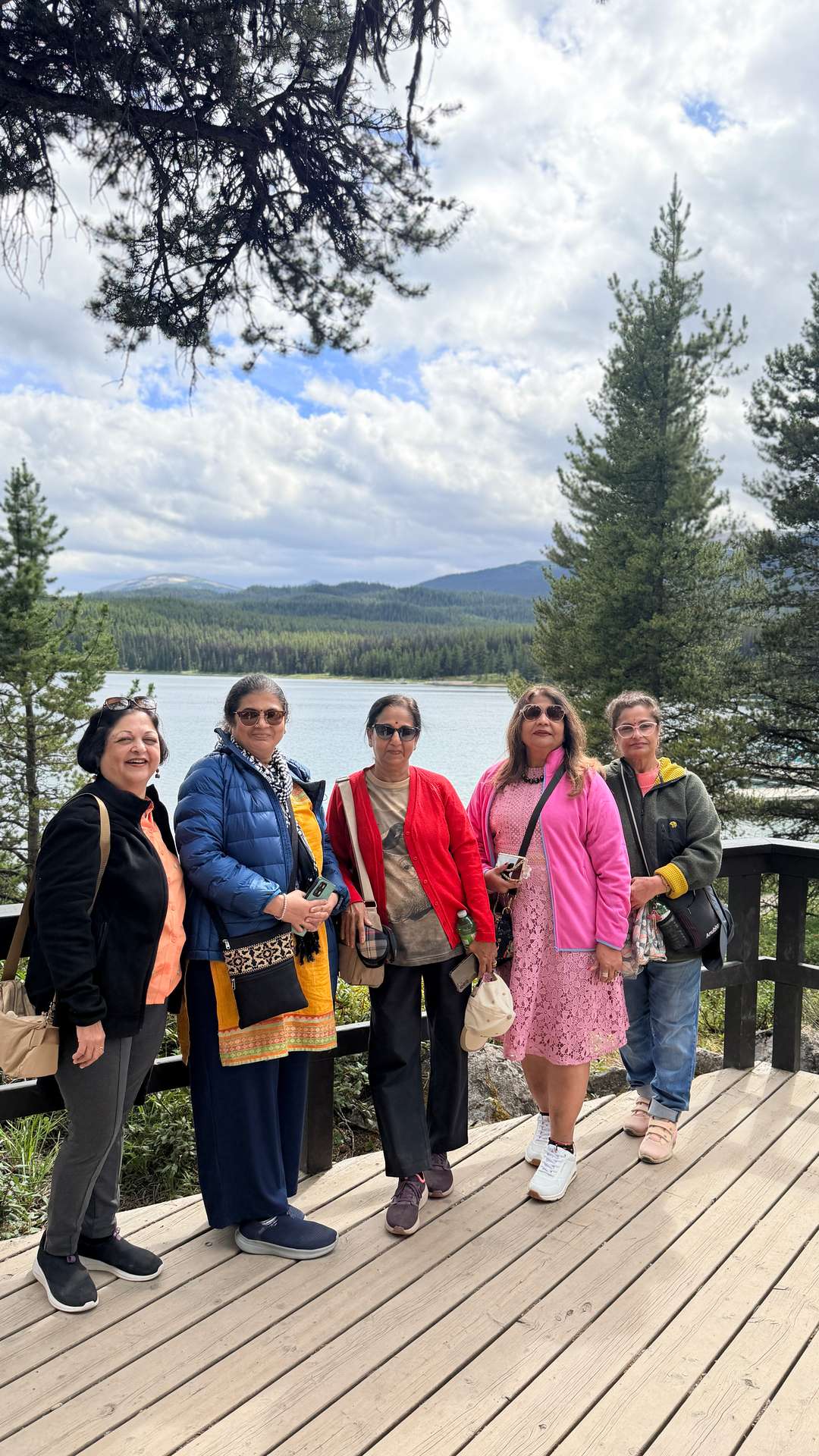
A significant number of the people on our trips arrive on their own, and a substantial share of those are women — frequently women in their forties, fifties and sixties, who have decided not to wait until someone else is free.
Small-group travel suits this better than almost any other format, and it is worth setting out why, and where its limits are.
The core of it: alone, but not by yourself
Solo travel usually forces a choice. Independent travel means total freedom and, at times, real isolation — days without a proper conversation, and evenings when eating alone in an unfamiliar city stops being romantic. A large group tour solves the isolation but replaces it with anonymity: you are one of forty, and nobody notices whether you are enjoying yourself.
A small group sits between the two. There is company at dinner if you want it and nobody minds if you disappear for an afternoon. By day three the group knows your name. By day six someone has noticed you were quiet at breakfast.
That last part is not a small thing.
The practical problems it solves
Arrival. The most stressful part of solo travel is usually the first few hours in an unfamiliar country — the airport, the transfer, the first night. On a group trip that is handled and you are met.
Evenings. Dinner alone is fine occasionally and wearing every night. Having a table to join, without being obliged to, resolves it.
Being somewhere unfamiliar after dark. Whether the concern is real or precautionary, walking back with two other people is simply easier than doing it alone.
The logistics. Border crossings, internal flights, tickets, permits, a pharmacy in a country where you do not speak the language. Someone else is handling it.
Being unwell. The genuinely difficult scenario in solo travel. In a group there is a leader whose job includes exactly this.
The single supplement, and how to avoid it
This is the biggest financial penalty solo travellers face, and it deserves a straight explanation.
Tour prices assume two people sharing a room. Travelling alone means the operator is paying for a room that would otherwise hold two — so a supplement is charged. On some trips it can add a substantial fraction to the total.
The usual solution is a room share: being matched with another solo traveller of the same gender, which removes the supplement entirely. If you have seen a note on one of our departures asking for a solo female traveller to fill a place, that is what it is — a room-share match, not a gimmick.
The questions worth asking any operator:
- Do you offer a same-gender room share?
- What happens if no match is found — do I pay the supplement, or do you absorb it?
- When will I know?
- Can I pay the supplement to have a room to myself if I would rather?
Wanting your own room is entirely reasonable and nobody should make you feel otherwise. Equally, room shares work well far more often than people expect.
On safety, honestly
A group does not make a destination safe. It changes the odds and the practicalities — you are rarely alone at night, someone knows where you are, and a local guide knows which streets and which situations to avoid.
What it does not do is remove the ordinary judgement any woman travelling abroad already exercises. The usual things still apply: modest dress where the culture calls for it, care with drinks, a plan for getting back, a copy of your documents kept separately.
Some of our destinations require more cultural care than others. Morocco and Egypt are majority-Muslim countries where covering shoulders and knees is the respectful norm and unwanted attention in busy markets is not unheard of. This is manageable, our guides are direct about it, and it is not a reason to avoid either country — but you should hear it before you go rather than discover it in a souk.
What to know about the group
Ask about the age profile of a typical departure. A group averaging thirty is a different experience from one averaging sixty — neither better, but you should know which you are joining.
Ask how many solo travellers are usually on a departure. If the answer is one, you may find yourself the odd number in a group of couples. If it is several, the social shape is easier from day one.
What a group cannot give you
Complete freedom. You are on a route with a timetable, and if your ideal is waking up and deciding that morning where to go, independent travel remains the better answer.
Guaranteed compatibility. A dozen strangers usually gel and occasionally do not. The odds are good and they are not certain.
A trip that is entirely your own. There will be a day, or a meal, or a conversation you would not have chosen. That is the trade for everything above.
Frequently asked questions
Do many women travel solo on small-group tours?
Yes — a substantial share of solo travellers on trips like these are women, often over forty.
Will I have to pay a single supplement?
Not if a same-gender room share can be arranged. Confirm the policy if no match is found.
Can I request my own room?
Yes, by paying the supplement. It is a perfectly normal request.
Is it safe to travel solo to Morocco or Egypt with a group?
Both are well-established destinations with excellent guides. Modest dress and ordinary caution apply, as they would for any traveller.
Will I be the only one on my own?
Usually not. Ask us about the specific departure and we will tell you honestly.
See our current departures and ask us about room-share availability on any of them — or read about what a typical day on one of our trips looks like.