
"Small-group tour" covers an enormous range. It can mean a fourteen-person coach running the same schedule a forty-person coach would. It can mean almost no structure at all. Neither is what we do, and the difference only becomes clear when you describe an actual day.
What follows is the shape of a typical one. It varies by destination — a Sahara day and a Lisbon day are not the same animal — but the principles hold across every trip we run.
The morning does not start at six
Unless there is a genuine reason, our days start at a civilised hour. Breakfast unhurried, departure mid-morning.
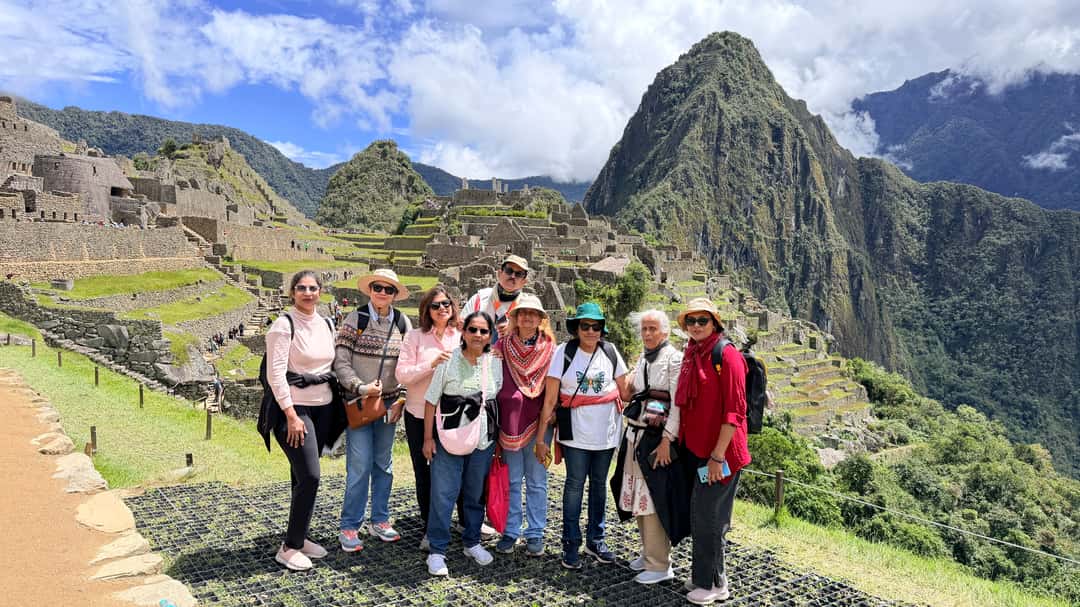
There are exceptions and they are real: a Nile temple before the heat, a dawn dune in the Sahara, a Denali wildlife tour, a Machu Picchu entry slot. When an early start buys you something that cannot be had later, we take it and tell you well in advance.
What we will not do is set a 6am departure because the itinerary is overloaded. If the day requires an early start to fit everything in, the answer is to take something out of the day.
One main thing, done properly
The core of the day is usually a single substantial experience rather than four rushed ones — a medina with a guide who grew up in it, a fjord cruise, a wine estate, a museum, a mountain drive with stops wherever the view earns one.
This is the biggest structural difference from a conventional tour. A large-group itinerary maximises the number of sights because volume is how it justifies its price. We would rather you spent two hours somewhere and remembered it.
Meals: some together, some your own
How many meals are included varies by trip — on some journeys almost everything is included, on others lunches are left free. Where a lunch is free, your guide points you at a few options at different prices and you go and choose.
That freedom is worth having. Some of the better meals people have on these trips are the ones they found themselves. The exact inclusions are listed on every tour page.
There is unscheduled time, on purpose
Most days have a block — an afternoon, or a long gap before dinner — with nothing planned.
Travellers occasionally read that as the itinerary being thin. It is the opposite: it is the most deliberate part of the design. It is when you go back to the square you liked, sleep for an hour, sit with a coffee and watch a city work, or do nothing whatsoever.
Evenings
Some dinners are group dinners, and on most trips there are a few that matter — a first night, a last night, a meal that is genuinely part of the destination.
Where dinner is not a group occasion, eat with the group, eat with two people you have got on with, or eat alone with a book. All three are entirely normal and nobody keeps score.
The pace is set by the slowest comfortable walker
Not the fastest. This sounds obvious and is surprisingly rare in practice.
In a group of a dozen there is always a range of fitness, and a well-run day is paced so that nobody is either straining to keep up or standing around waiting. Where a walk is genuinely demanding, there is normally an alternative for anyone who would rather not — and taking it is unremarkable, not a defeat.
What the leader actually does
Handles the logistics you would otherwise spend your holiday on: tickets, bookings, timings, the restaurant that has your dietary requirement written down, the pharmacy when someone needs one.
Also, and less visibly: watches how the group is doing. When a group is flagging on day nine, a good leader quietly lightens day ten. That judgement is most of the job and you should never notice it happening.
What we ask of you
Be on time. In a group of fourteen, one person running fifteen minutes late costs the group over three hours of collective waiting.
Say if something is wrong — the pace, the food, the room, how you are feeling. Almost everything is fixable on the day and almost nothing is fixable in a review afterwards.
And be reasonably sociable at the start. The group takes a couple of days to settle, and the trips people remember are the ones where that happened early.
Frequently asked questions
What time do the days usually start?
At a civilised hour as standard, with genuine early starts only where the experience requires it.
Is there free time?
Yes, deliberately — most days have an unscheduled block.
Are all meals included?
It varies by trip. Breakfast always; lunches and dinners depend on the itinerary. The specifics are listed on each tour page.
What if I cannot manage a particular walk?
There is normally an alternative. Tell the leader — it is a routine conversation, not an awkward one.
Do I have to join everything?
No. Opting out of an afternoon is entirely normal.
Every itinerary is built to this shape. See our current small-group journeys, or read about why we think small groups travel better.