
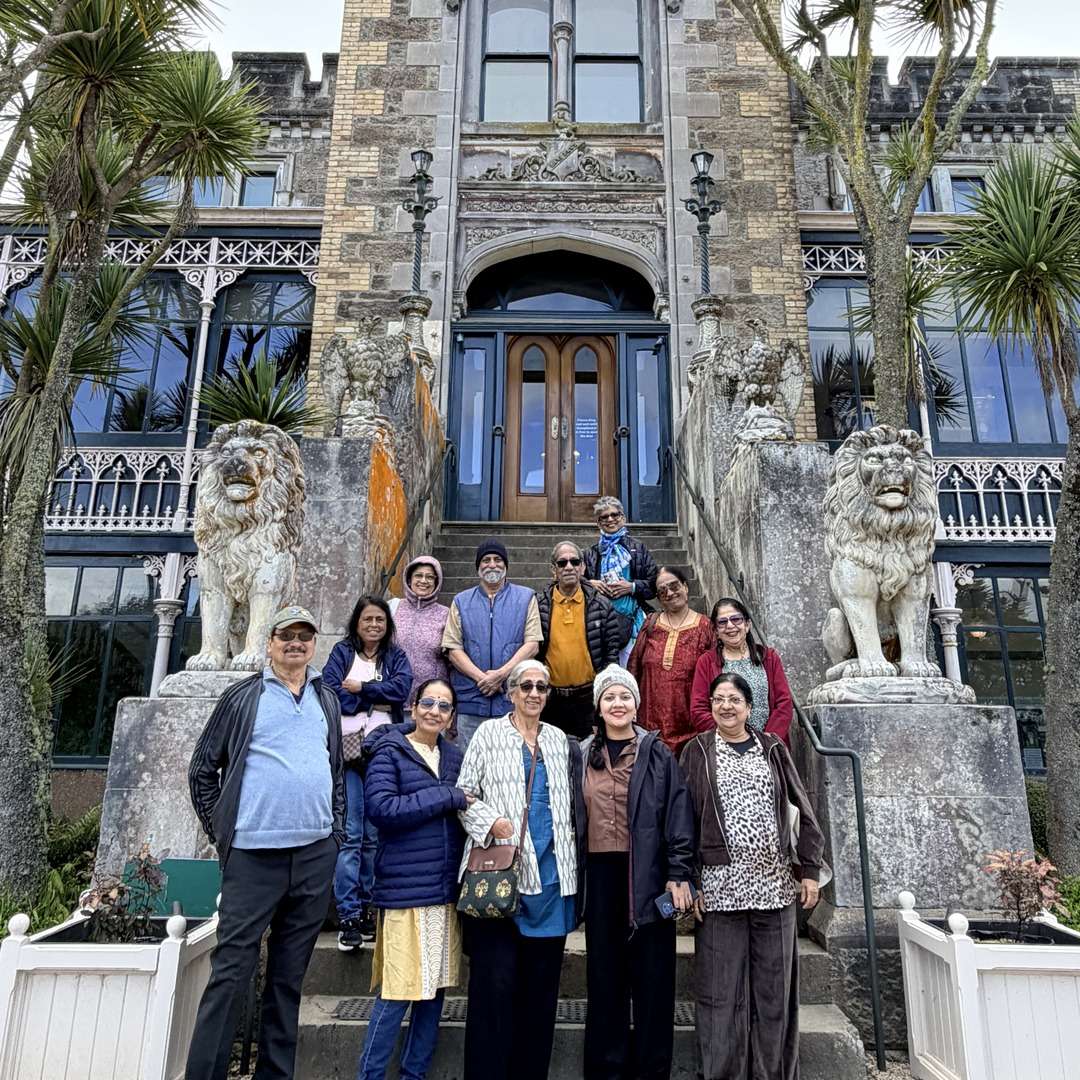
New Zealand has a marketing problem, if you are over sixty. Every image the country exports involves somebody leaping off something — a bridge, a plane, a cliff — and the word "adventure" is attached to it so relentlessly that a great many travellers quietly conclude it is not for them.
They are wrong, and it is worth explaining why. New Zealand is one of the best long-haul destinations there is for travellers in their sixties, seventies and beyond — with two genuine caveats that deserve straight answers.
What makes it well suited
The infrastructure is first-rate. Roads are excellent and well signposted. Public buildings, museums and visitor centres are modern and accessible. Medical care is of a high standard and English is the working language, which removes an entire category of stress if something goes wrong.
The distances are gentle. Compared with the drives a South American or African itinerary demands, New Zealand's are short. Two to four hours between stops is typical, on good roads, through scenery that means nobody is watching the clock.
The best things require no fitness at all. This is the crucial point. Milford Sound is experienced from the deck of a boat. Lake Tekapo and the Church of the Good Shepherd are a short walk from a car park. The glowworm caves are a seated boat ride. The Marlborough Sounds ferry and the coastal train are both, literally, sitting down. Rotorua's geothermal parks are flat boardwalks. A Māori cultural welcome involves a chair and a very good meal.
You can have a comprehensive, deeply satisfying New Zealand trip without ever attempting anything strenuous.
No altitude problem. Unlike a Peru itinerary, nothing on a standard route sits high enough to cause altitude sickness. Queenstown is barely three hundred metres above sea level.
Food and water are straightforward. Tap water is safe, hygiene standards are high, and the dietary anxiety that shadows some destinations simply does not apply.
Caveat one: the flight is long
There is no way around this. From India, New Zealand is roughly a full day of travel, usually with at least one connection, and it is one of the longest journeys most travellers will make.
What helps: build in rest at the start rather than starting the itinerary at full speed, choose the connection that gives you a civilised layover rather than the fastest routing, and move regularly on the aircraft. Compression socks are worth it. If you have any history of circulatory problems, this is a conversation to have with your doctor before booking rather than a detail to sort out later.
The jet lag going out is significant — New Zealand is around seven hours ahead of India — and the return is usually easier.
Caveat two: itineraries vary enormously, so read yours
This is where travellers get caught out, and it applies to any operator including us.
Two New Zealand trips of identical length can be entirely different in physical demand. One might be built around boat cruises, scenic drives and cultural experiences. Another might include a full-day alpine crossing of nineteen kilometres over volcanic terrain, which is a serious undertaking for anyone and a genuinely demanding one after sixty.
Both are legitimate trips. They are not the same product, and the brochure language — "active", "moderate", "some walking" — is not standardised across the industry and cannot be relied on.
Ask these specific questions before booking any New Zealand itinerary:
- What is the longest single day of walking, in kilometres and hours?
- Is there any day with significant elevation gain, and how much?
- Which activities are optional, and what do people who opt out actually do instead?
- What is the longest drive without a break?
- Are there stairs at the accommodation, and are lifts available?
- How many single-night stops are there? Repeated packing is more tiring than distance.
Any operator worth booking with will answer all six precisely. Vagueness is the warning sign, not a demanding answer.
Things worth knowing
Weather changes fast. Mountain conditions in New Zealand can turn within an hour. This is a packing issue rather than a safety one on an organised trip — layers and a genuine waterproof — but it does mean a warm morning is not a promise about the afternoon.
The sun is fierce. UV levels in New Zealand are among the highest in the world. Burn times in summer are short. Hat, sunglasses and high-factor protection are not optional, even on cool days.
Travel insurance has age limits. Most policies bundled into tour prices cap out at a certain age — ours at sixty-nine — after which cover has to be arranged separately and costs more. Check this early, because it occasionally changes the maths on a trip.
Declare medical conditions honestly. Not for bureaucracy's sake — because a leader who knows tends to make quietly better decisions all week.
The verdict
If you can walk comfortably for four or five kilometres on mixed ground and manage a long flight, New Zealand is well within reach and will likely rank among the best trips you have taken. The scenery does the work; you mostly have to be there.
The travellers who struggle are those who booked an itinerary built for someone else and did not ask the six questions above.
Frequently asked questions
Is New Zealand suitable for older travellers?
Yes, unusually so — excellent infrastructure, short drives, no altitude, and the headline experiences require little or no fitness.
How long is the flight from India?
Roughly a full day of travel including connections. Building in rest on arrival makes a substantial difference.
Do Indian passport holders need a visa?
Yes — a New Zealand visitor visa, applied for online before travel. Visa fees are included in our tour price.
Is there an altitude problem?
No. Nothing on a standard itinerary is high enough for altitude sickness.
Do I have to do the adventure activities?
No. Bungee, skydiving and jet boats are optional extras that many travellers skip entirely.
What about travel insurance over 69?
Cover above the standard age limit usually needs arranging separately. Raise it with us early.
Our New Zealand journey runs eleven days across both islands at a deliberately unhurried pace, with no long hikes, next departing 14–25 November 2026. See the full itinerary, day by day — and if you have questions about the physical demands of any particular day, ask us before you book.