
Morocco punishes the over-ambitious itinerary. The country is larger than it looks on a map, the drives between its great cities are long, and the single most common mistake is trying to see all of it in a week.
Eleven days is, in our experience, the number at which Morocco stops being a highlights reel and starts being a journey. Here is the shape of it, and — just as usefully — what we leave out.
The route in one line
Rabat → Chefchaouen → Ifrane → Fes → Merzouga (Sahara) → Todgha & Dades → Ouarzazate → Aït Benhaddou → Marrakesh → Essaouira → Casablanca.
North to south, coast to mountains to desert and back to the Atlantic. It is a loop that makes geographical sense, which is why it does not feel like backtracking.
Day 1: Rabat
Most itineraries land in Casablanca and leave immediately. We start in Rabat instead — the actual capital, and a city most visitors skip entirely.
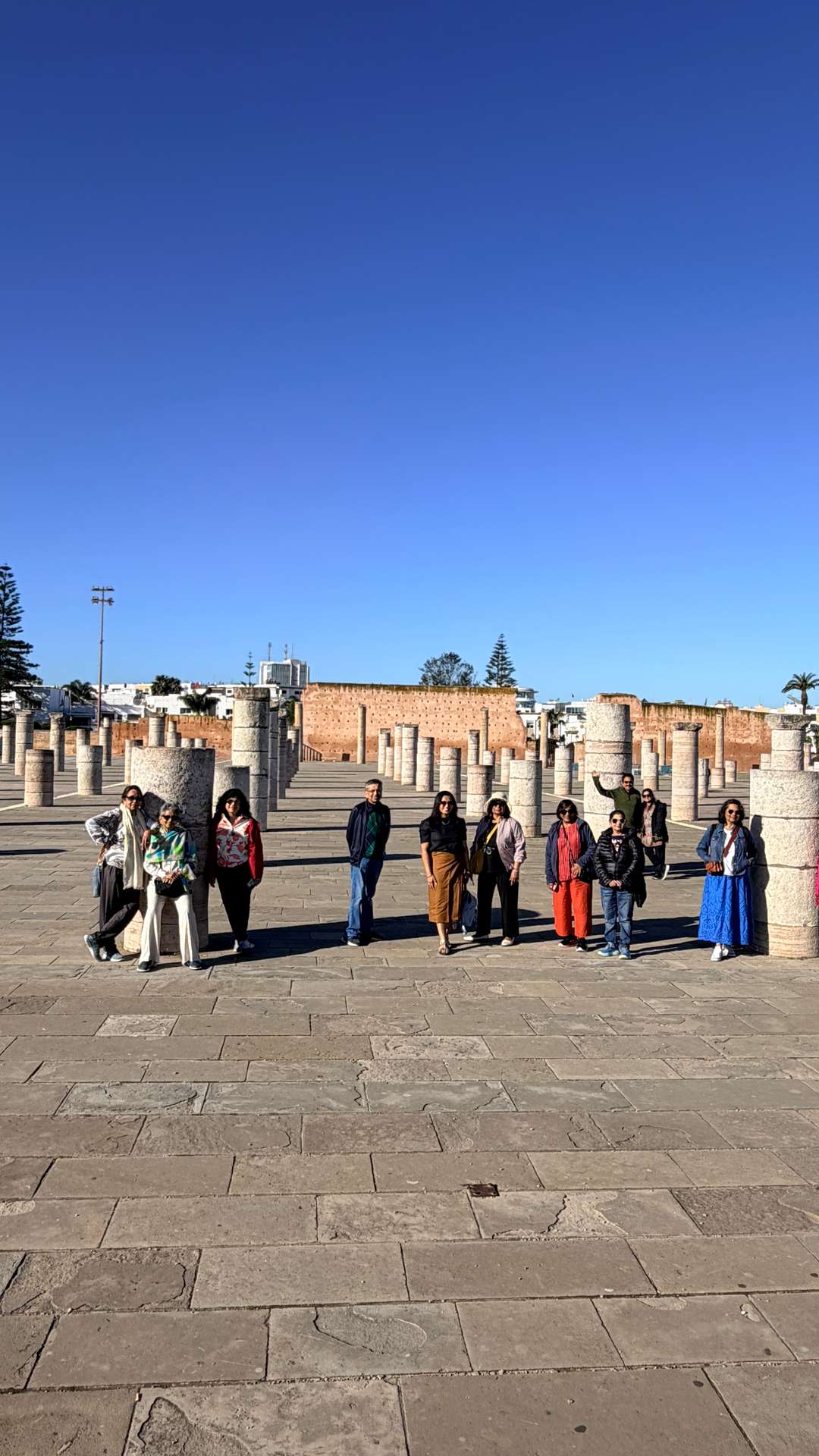
It is a gentle opening: the blue-and-white Kasbah of the Oudayas above the Atlantic, the Hassan Tower, the royal palace and the historic tombs. Rabat is calmer than Fes or Marrakesh and it lets you find your feet in a Moroccan city before being dropped into the deep end of a medina.
Day 2: Chefchaouen
The blue city, in the Rif mountains. Every wall, step and doorframe washed in a dozen shades of indigo.
Chefchaouen has become extremely photographed, and it is fair to ask whether it lives up to it. It does — but the timing is everything. The town in the middle of the day is full of day-trippers. In the early morning and the evening, when the light is soft and the lanes are quiet, it is genuinely lovely. Staying the night is the whole trick.
Days 3–4: Ifrane and Fes
Ifrane is a mountain town of alpine-style chalets and cedar forest, nicknamed the Switzerland of Morocco, and it is the single most disorienting thing on the itinerary — you have not stopped being in Morocco, but you would not know it from the window.
From there, Fes: the oldest and most complete medieval city in the Arab world, and the highlight of Morocco for a lot of travellers. Fes el-Bali is a walled medina of thousands of lanes with no vehicles in it — donkeys and handcarts still do the deliveries. It contains one of the world's oldest continuously operating universities, centuries-old tanneries, and workshops for brass, ceramics and weaving that are working businesses rather than exhibits.
It is also genuinely disorienting, which is the reason to see it with someone who knows it. A local guide here is not a luxury.
Day 5: into the Sahara at Merzouga
The long drive south through the Middle Atlas and Erfoud, into date-palm country and then into the Erg Chebbi dunes.
You arrive at camp around sunset, eat under canvas, sit by a fire, and sleep in a proper bed in a tent floored with Berber rugs. The sky is the point.
We have written a longer piece on exactly what a desert camp night involves, because it is the thing people most want to know before they book.
Day 6: Sahara sunrise and the road of a thousand kasbahs
Sunrise from the dune behind the camp, then west through the Todgha Gorge — a short walk between vertical rock walls — and along the Dades valley past mud-brick kasbahs to Ouarzazate.
Day 7: Aït Benhaddou and over the Atlas
Aït Benhaddou is the famous one: a fortified village of packed earth on a hillside, UNESCO-listed, and the backdrop to a great many films you have seen. Then over the High Atlas by the Tizi n'Tichka pass into Marrakesh.
Day 8: Marrakesh
The Koutoubia Mosque, Bahia Palace, the Saadian Tombs, the souks, and Djemaa el-Fna — a fairly ordinary square by day and an entirely different organism after dark.
Days 9–11: Essaouira, the coast, and home
And then, deliberately, we go to the coast. Essaouira is a whitewashed Atlantic port town with sea walls, gulls, a working fishing harbour and an artistic history. After a week of medinas and desert, it is the right change of pace — cool, salty, slow, with grilled fish on the harbour.
The final day follows the Atlantic coast north via Safi and Oualidia to Casablanca for the flight home.
The order matters. Marrakesh is the loudest thing in Morocco and finishing there would send you home rattled.
What we leave out, and why
Tangier. Interesting city, but adding it means either cutting Rabat or adding two days of driving.
Extra nights in the gorges. Beautiful, but the return on an extra night there is lower than the cost in pace.
Trekking in the High Atlas. A genuinely great thing to do in Morocco, and a different trip. Adding a two-day trek to this route would change who the trip is for.
Agadir and the southern beaches. Resort territory, and not what this journey is about.
Is eleven days enough for Morocco?
For the imperial cities, the Sahara and the coast: yes, comfortably. For those plus High Atlas trekking, the far south and Tangier: no — that is a three-week country.
Frequently asked questions
How many days do you need in Morocco?
Ten to twelve covers the imperial cities, the desert and the coast without rushing. A week forces you to drop either the Sahara or Fes.
Is Fes or Marrakesh better?
Fes is older, denser and more intact; Marrakesh is livelier and easier. Many travellers arrive expecting to prefer Marrakesh and leave preferring Fes.
How long are the driving days?
The longest are the runs south to Merzouga and over the Atlas to Marrakesh. Both are broken with stops, and both are scenic rather than dull.
How much walking is there?
Moderate walking through medinas and during sightseeing, with some steps. The pace is comfortable, with regular opportunities to rest. Comfortable walking shoes are recommended.
Do Indian passport holders need a visa for Morocco?
Yes, though Indian citizens holding certain valid visas or residence permits (such as Schengen, UK or US) can apply for Morocco's simpler electronic travel authorisation. Visa fees are included in our tour price and we guide you through it after booking.
When should I go?
October to April. See our guide to the best time to visit Morocco for the month-by-month detail.
Our next Morocco departure runs 8–18 February 2027. See the full day-by-day itinerary, inclusions and group size.