
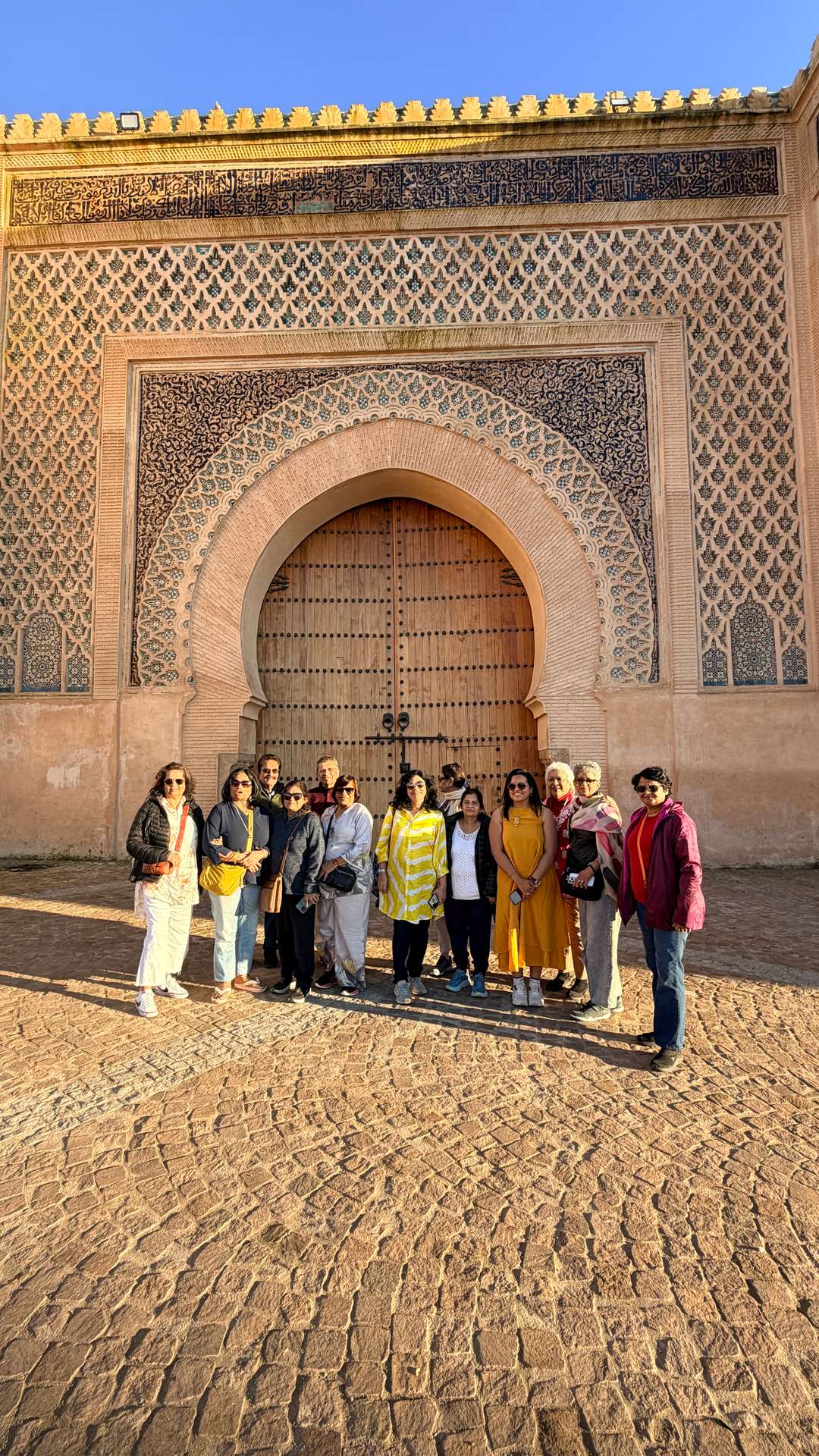
Morocco is not one climate. In a single eleven-day journey you can stand in Atlantic sea fog at Essaouira, walk a medina at twenty-six degrees in Fes, cross a cedar forest in Ifrane where it snows in winter, and sleep in the Sahara where the night drops to five.
That range is what makes the country extraordinary. It is also why the month you choose matters more in Morocco than in almost anywhere else we travel.
The short answer
October to April. That is the window, and every departure we run falls inside it. Within that window, the sweet spots are October–November and March–April, with midwinter offering a quieter, cooler, and in some ways more atmospheric alternative.
Autumn: October and November
The summer heat has broken but the country is still warm — expect low to mid-twenties in the cities, comfortably warm in the desert by day, cool at night.
This is arguably the best all-round time to go. The medinas of Fes and Marrakesh are walkable at midday rather than merely survivable. The date harvest is in around Merzouga. The light is long and low, which flatters the kasbahs and the dunes in a way that midsummer glare simply does not.
Winter: December to February
Cities sit around 15–22°C by day, which is pleasant walking weather. The catch is the nights, particularly in the desert, where temperatures fall to 5–10°C and occasionally lower.
This is not a reason to avoid winter — it is a reason to pack properly. A desert night in January under a heavy blanket with a fire outside the tent is one of the most memorable things Morocco offers, and the winter sky over the Sahara is startlingly clear.
Winter also brings snow to the High Atlas and the cedar forests around Ifrane — the reason it is nicknamed the Switzerland of Morocco. Seeing snow on the mountains from a warm courtyard in Marrakesh is a particular pleasure.
Our February departure sits here deliberately: quiet medinas, cool clear days for walking, and desert nights cold enough for the stars to be genuinely spectacular.
Spring: March and April
Arguably tied with autumn for the best conditions. The country greens up, the Atlas foothills carry wildflowers, and temperatures settle into the low-to-mid twenties. Almond and orange blossom appear. The desert is warm by day without being oppressive.
April is the last comfortable month before the heat begins to build in earnest.
Summer: why we do not go
It would be easy to run summer departures — the school holidays make them commercially obvious. We do not, and the reasons are worth stating plainly.
The interior becomes genuinely punishing. Marrakesh and Fes regularly pass forty degrees in July and August. A medina is a maze of stone and shade with poor airflow; walking one in that heat is not sightseeing, it is endurance.
The Sahara is dangerous rather than romantic. Daytime desert temperatures in high summer are not something we will put a group into, particularly a group that includes travellers in their sixties and seventies.
The trip stops being the trip. Everything worth doing gets pushed to dawn and dusk, the middle of every day is written off, and the unhurried pace that is the whole point of how we travel becomes impossible.
The coast at Essaouira stays cool through summer thanks to the Atlantic. But a Morocco trip that can only be the coast is not a Morocco trip.
Month by month at a glance
| Period | Cities | Desert nights | Verdict |
|---|---|---|---|
| Oct–Nov | 20–28°C | Mild | Excellent |
| Dec–Feb | 15–22°C | 5–10°C | Very good, pack warm |
| Mar–Apr | 20–26°C | Mild | Excellent |
| May–Jun | Rising | Warm | Workable, heat building |
| Jul–Aug | 35–45°C | Hot | We do not run departures |
| Sep | Cooling | Warm | Good from mid-month |
What to pack, whatever the month
Layers, always. The gap between a Marrakesh afternoon and a Sahara night can be twenty degrees on the same day. This surprises people every single time.
Modest clothing for the cities. Morocco is a Muslim country and shoulders and knees covered is the respectful default in medinas and religious sites. This is about courtesy rather than rules, and it also happens to be the most comfortable thing to wear in strong sun.
Real walking shoes. The medinas are uneven, the Todra Gorge walk is around six kilometres, and there are kasbah steps. Sandals will not do it.
Sun protection year-round. Including in January. The winter sun in the desert is stronger than it feels.
Frequently asked questions
What is the best month to visit Morocco?
October, November, March and April offer the best balance of warm days and comfortable nights. February is excellent if you want quiet medinas and a clear desert sky, and do not mind cold nights.
Is Morocco too cold in winter?
Not in the cities — 15–22°C is good walking weather. The desert nights are genuinely cold at 5–10°C, so warm layers are essential.
Can you visit the Sahara in summer?
It is possible but we consider it unsuitable for a group trip. Daytime heat is extreme and the experience suffers badly for it.
Does it rain in Morocco?
Very little across the October–April window. The Atlantic coast sees more than the interior, and the desert almost none.
Is Morocco safe for travellers?
Yes — it is one of Africa's most established and welcoming destinations, with excellent tourism infrastructure and local guides who know the cities intimately.
Our next Morocco departure runs 8–18 February 2027, Rabat to Casablanca, through Chefchaouen, Fes, the Sahara, Marrakesh and Essaouira. See the full itinerary.