
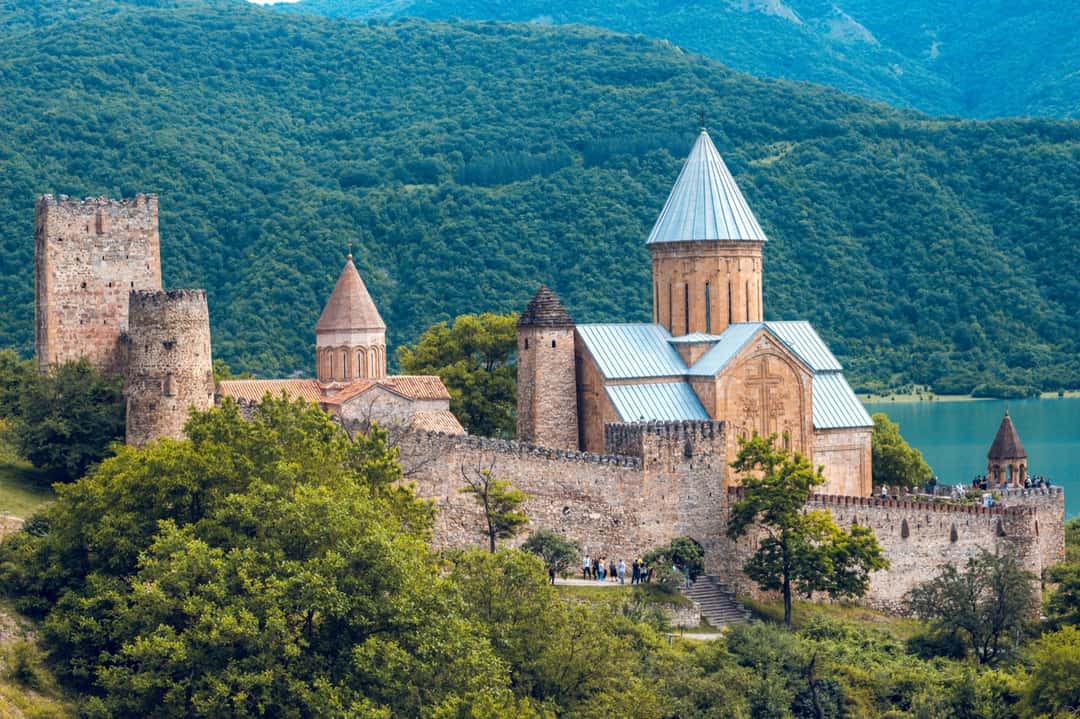
The South Caucasus is a region of extremes packed into a small space. Tbilisi sits at around five hundred metres; a few hours north, the road to Kazbegi crosses the Jvari Pass at well over two thousand. Armenia's Lake Sevan sits at nineteen hundred metres and is one of the largest high-altitude lakes in the world.
That vertical range is why the season matters here. It is not really about temperature in the cities — it is about whether the mountain roads that make the trip worth taking are open and clear.
The short answer
Late April to early June, and September to late October. Our departures sit at the end of October, and there is a specific reason for that.
Autumn: September and October
This is the best of it, and the reason is the harvest.
Georgia is one of the oldest winemaking countries on earth, and autumn across the country is a working season rather than a scenic one — grapes coming in, presses running, the smell of fermentation in village courtyards, and a general atmosphere of everybody being slightly too generous with what they have just made. Rtveli, the grape harvest, runs from roughly late September into October and is a genuine cultural season, not a tourist event.
The weather cooperates. Days in Tbilisi and Yerevan sit comfortably in the high teens to low twenties. The mountain air is sharp and clear, which matters enormously for the two views this trip is built around: Mount Kazbek above the Gergeti Trinity Church, and Mount Ararat from the Armenian side.
Those views are the whole game. Ararat in particular spends much of the summer hidden behind haze — it is a five-thousand-metre volcano sitting in heat shimmer across a plain. In the clear, cool air of late October, it appears in full, snow-capped, apparently floating above Yerevan. People who have lived in the city for years still stop to look at it.
And the colour: the Caucasus foothills and the forests around Borjomi and Dilijan turn gold and red through October in a way that photographs badly and looks extraordinary in person.
Spring: late April to early June
The other strong window. The snow retreats from the passes, the valleys turn green, wildflowers appear across the highland meadows, and the rivers run hard with meltwater.
Spring lacks the harvest and the crystalline mountain air of autumn, but it gains lushness — the Caucasus in May is startlingly green — and slightly longer days. If autumn dates do not work for you, this is not a lesser season, just a different one.
One caveat: early in the window, the high road to Kazbegi can still be affected by late snow.
Summer: workable, but not our choice
July and August are hot in the cities — Tbilisi and Yerevan can push into the mid-thirties, and neither city is built for it. The mountains stay pleasant and are genuinely a refuge, which is exactly why locals leave for them.
The bigger issue is visibility. Summer haze substantially reduces the odds of a clear Ararat or Kazbek, and on a trip where two mountain views are among the primary reasons to come, that is a meaningful loss.
Winter: for a different kind of traveller
Deep winter has real appeal — snow on the monasteries, empty sites, Tbilisi's sulphur baths at their most welcome, and a genuine ski scene in both countries.
But the high mountain roads become unreliable or closed, several of the most striking monasteries become difficult to reach, and a nine-day route linking the two countries stops being dependable. We do not run winter departures for that reason.
At a glance
| Season | Cities | Mountain access | Verdict |
|---|---|---|---|
| Sep–Oct | 17–24°C | Open, clear air | Best — harvest and views |
| Late Apr–Jun | 18–25°C | Open from May | Excellent — green and lush |
| Jul–Aug | 30–35°C | Open, hazy | Hot, poorer visibility |
| Nov–Mar | 0–10°C | Unreliable | We do not run departures |
What to pack for the Caucasus
- Layers, seriously. A day can start at twenty degrees in Tbilisi and finish near freezing at the Gergeti church. This is the most common packing mistake on this trip.
- A windproof outer layer. The mountain passes are exposed and the wind does more than the temperature suggests.
- Modest cover for monasteries. Both countries are deeply Orthodox and their churches are active places of worship. Women are generally expected to cover their heads and shoulders; scarves are often available at the door, but bringing your own is easier.
- Shoes with grip. Monastery approaches are cobbled, stepped and frequently steep.
Frequently asked questions
What is the best month to visit Georgia and Armenia?
Late September and October, for the grape harvest, the autumn colour and the clearest mountain views of the year.
Will I see Mount Ararat?
Nothing can be guaranteed, but autumn gives you by far the best odds. Summer haze frequently obscures it entirely.
Is the Kazbegi road difficult?
It is a mountain road and it is spectacular. In our autumn window it is normally open and in good condition; in winter it becomes unreliable.
Are Georgia and Armenia safe for travellers?
Yes. Both are welcoming, hospitable countries with low crime and a strong tradition of treating guests exceptionally well.
Do Indian passport holders need a visa?
Yes, for both — though both are straightforward. Georgia and Armenia each offer e-visas, and holders of certain valid US, UK or Schengen visas may be exempt for Georgia. Visa fees are included in our tour price and we guide you through both once you book.
Our next Georgia & Armenia departure runs 27 October to 4 November 2026 — nine days from Tbilisi to Yerevan through Borjomi, Kazbegi, Dilijan, Lake Sevan, Garni and Geghard. See the full itinerary.