
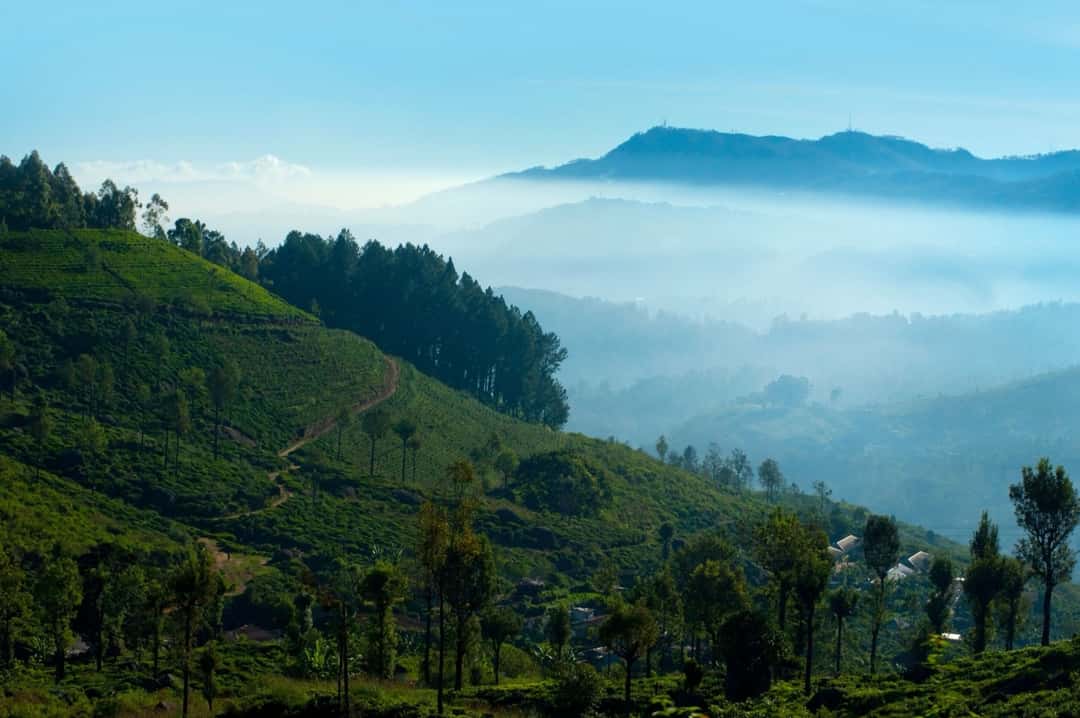
The usual answer to "when should I go to Sri Lanka?" is "it depends which side of the island". That sounds like a dodge, but it is the honest answer — and once you understand why, choosing your dates becomes straightforward.
The key: two monsoons, two coasts
Sri Lanka is hit by two monsoons from opposite directions:
- The south-west monsoon (Yala season), roughly May to September, brings rain to the west coast, the south coast and the western hill country — Colombo, Bentota, Galle, Mirissa, and the tea estates around Nuwara Eliya.
- The north-east monsoon (Maha season), roughly November to February, brings rain to the north and east — Trincomalee, Pasikudah, Jaffna.
So there is almost always good weather somewhere. The question is whether it is where you want to go. For most first-time visitors, the classic route — the Cultural Triangle, the tea country, the Ella train, Yala and the south coast — is at its best from December to March.
Month by month
December to March — the best time for the classic route
Dry, sunny and settled on the west and south coasts and in the hill country. Expect 26–31°C and humid in Colombo, Bentota and Galle, and 24–32°C in Habarana and Yala. Nuwara Eliya, at close to 1,900 m, runs 10–20°C by day and can fall into single figures at night. Seas on the south coast are calm.
December and the New Year are the busiest and most expensive weeks. Late January to March keeps the weather and loses some of the crowds, which is why we run our departures then.
The Cultural Triangle can still catch the tail end of the north-east monsoon in December and early January — usually short showers rather than washed-out days.
April — hot, and festive
The hottest month on the plains, with humidity building before the monsoon. Mid-April is Sinhala and Tamil New Year (Avurudu), a major holiday when many businesses close and Sri Lankans travel home or to the hills — Nuwara Eliya's "April season" is the island's busiest time there. Lively, but book well ahead.
May to September — the south-west monsoon
The west and south coasts are wet, windy and the sea is rough; this is not beach season in Bentota or Galle. The rain usually comes in heavy bursts rather than all day, and prices drop. Meanwhile, the east coast is at its best — Trincomalee, Pasikudah and Arugam Bay. May also brings Vesak, the full-moon festival of lanterns, and July or August brings the Esala Perahera in Kandy, one of Asia's great processions.
Yala usually closes for part of the dry season (often around September to mid-October) to let the wildlife rest — check before planning a safari in these months.
October and November — the inter-monsoon
The least predictable period, with heavy afternoon thunderstorms across much of the island. Quieter and cheaper, but not ideal for a first visit with a fixed itinerary.
Best time by activity
- Elephants at Minneriya and Kaudulla: the famous "gathering" peaks in the dry months of July to September, when herds converge on the shrinking reservoirs. But large herds are seen year-round, and our January safaris regularly find big family groups.
- Wildlife at Yala: February to July is often cited as the best period, as the vegetation thins and animals come to water. January is also good.
- The Ella train and tea country: January to March for clear views; the hill country is greener but mistier in the monsoon.
- South-coast beaches: December to April.
- East-coast beaches: May to September.
Why we chose late January
Our small-group departures run in the second half of January. The south and west coasts are dry, the tea country is clear and cool, Yala is open, the Christmas and New Year crowds have gone, and Indian school and work calendars tend to be easier than in December. It is the one window where every stop on the classic route is good at the same time.
What to pack for January
Light, breathable cotton and linen for the plains and the coast; a proper warm layer and a light jacket for Nuwara Eliya; comfortable walking shoes; sun protection, a hat and insect repellent; and clothing that covers shoulders and knees for temples.
Frequently asked questions
What is the best month to visit Sri Lanka?
For the classic route through the Cultural Triangle, hill country, Yala and the south coast, January to March is the best period.
Is it a good idea to visit Sri Lanka during the monsoon?
It can be, if you go to the side of the island that is dry — the east coast from May to September, or the west and south from December to March.
How cold does it get in Nuwara Eliya?
Days are around 10–20°C, and nights can drop into single figures in January. Bring a warm layer.
When is the best time for safaris in Sri Lanka?
Wildlife is good year-round. January to March suits a combined itinerary; Yala is especially good from February, and the Minneriya elephant gathering peaks from July to September.
Is December a good time to visit Sri Lanka?
The weather is good on the south and west coasts, but it is the busiest and most expensive time. Late January keeps the weather with fewer crowds.
Our next small-group departure runs from 25 January to 1 February 2027. See the itinerary, read how the eight days fit together, or our practical guide to Sri Lanka for Indian travellers.